How Bonuses Are Actually Taxed: Federal + State Breakdown (2026)
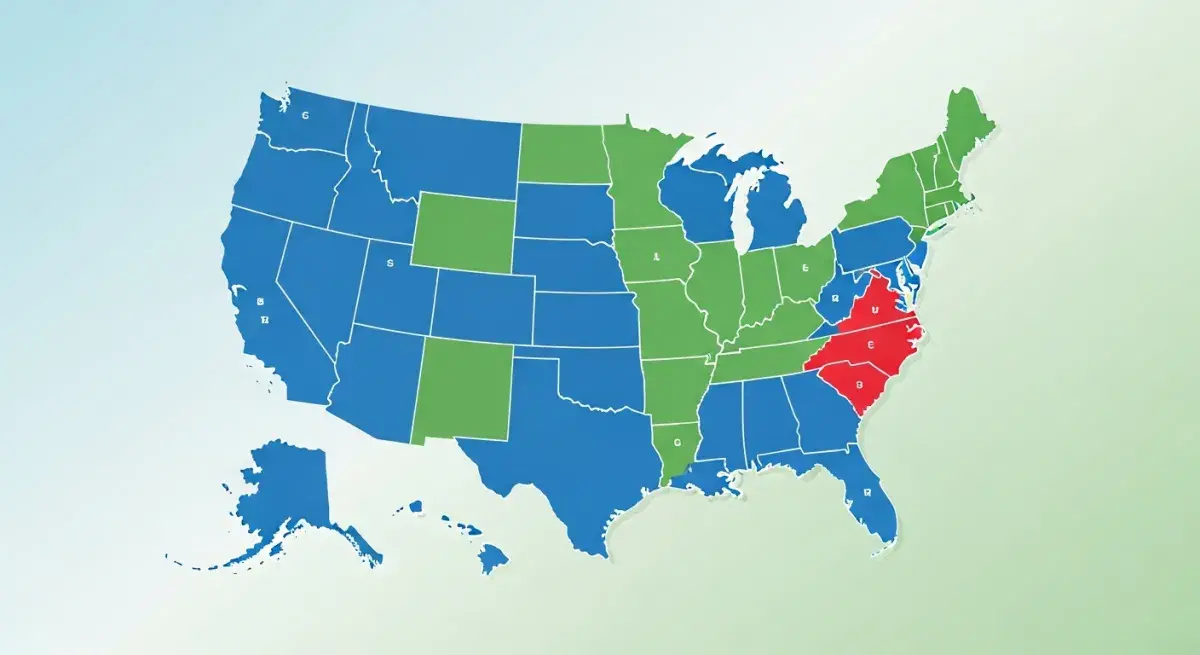
The promised bonus is $10,000. The deposit lands at $7,500 in Texas, $6,012 in California, $6,373 in New York. Same gross number, three different take-homes — and in every case the missing chunk is split between a fixed federal rule and a wildly variable state rule. This guide walks through both halves for 2026, then runs a full state-by-state table you can use to estimate your own take-home before payroll cuts the check.
The Federal Half: A Flat 22% Withholding
Every employer in the United States is bound by the same federal rule on bonuses, set by IRS Publication 15 (Circular E), Section 7. The rule is short: bonuses, commissions, severance, back pay, and any other "supplemental wages" must be withheld at a flat 22% federal income tax rate when the bonus is paid separately or identified separately on the paystub. Above $1 million in cumulative supplemental wages from a single employer in one calendar year, the excess is withheld at 37% — the top federal marginal rate, mandatory under Treas. Reg. § 31.3402(g)-1.
That 22% is just withholding, not your final tax bill. Your actual federal tax is computed on your full annual income at your real marginal bracket per IRS Revenue Procedure 2025-11. If your marginal rate is 12%, you over-withheld by 10 percentage points and will get that back as a refund. If your marginal rate is 32%, you under-withheld and will owe more in April. Either way the 22% number on your paystub is not the final answer — we covered the mechanics in detail in our bonus withholding deep-dive.
On top of federal income tax withholding, FICA still applies on bonuses just like regular wages: 6.2% Social Security up to the 2026 Social Security wage base of $184,500, and 1.45% Medicare on every dollar (plus 0.9% Additional Medicare on YTD wages above $200,000 single / $250,000 joint). Total federal payroll-tax-plus-withholding floor on a typical bonus: 29.65%.
The State Half: A 0% to 15.99% Spread
States diverge wildly. Most states with an income tax publish a "supplemental wage" rate just like the IRS does — a flat percentage employers apply to bonuses regardless of bracket. A minority of states (Connecticut, New Jersey, Rhode Island, plus D.C.) use the regular wage-bracket withholding tables on bonuses, which usually pulls more if the bonus is large relative to regular pay. Nine states levy nothing at all because they have no general state income tax.
The 2026 state supplemental rates below come from each state's department of revenue tables published for the 2026 calendar year. Local taxes (NYC, Yonkers, Indiana counties, Pennsylvania localities, Maryland counties, Portland Metro / Multnomah, San Francisco gross-receipts) are not in this table — check the local schedule for those.
| State | 2026 Bonus Withholding | $10,000 Bonus — Net Take-Home |
|---|---|---|
| Alabama | 5.0% flat | $6,535 |
| Alaska | 0% (no state tax) | $7,035 |
| Arizona | 2.5% flat | $6,785 |
| Arkansas | 4.4% flat | $6,595 |
| California (cash) | 10.23% supplemental | $6,012 |
| California (stock/RSU) | 15.99% supplemental | $5,436 |
| Colorado | 4.40% flat | $6,595 |
| Connecticut | regular tables (top 6.99%) | $6,336 (effective) |
| Delaware | regular tables (top 6.6%) | $6,375 (effective) |
| Florida | 0% (no state tax) | $7,035 |
| Georgia | 5.39% flat | $6,496 |
| Hawaii | up to 11.0% | $5,935 |
| Idaho | 5.695% flat | $6,466 |
| Illinois | 4.95% flat | $6,540 |
| Indiana | 3.05% state + county | $6,730 (no county) |
| Iowa | 3.8% flat | $6,655 |
| Kansas | 5.0% supplemental | $6,535 |
| Kentucky | 4.0% flat | $6,635 |
| Louisiana | 3.0% flat | $6,735 |
| Maine | 5.0% supplemental | $6,535 |
| Maryland | 5.75% + county (avg 3%) | $6,160 |
| Massachusetts | 5.0% supplemental | $6,535 |
| Michigan | 4.25% flat | $6,610 |
| Minnesota | 6.25% supplemental | $6,410 |
| Mississippi | 4.4% flat | $6,595 |
| Missouri | 4.7% supplemental | $6,565 |
| Montana | 5.9% supplemental | $6,445 |
| Nebraska | 5.0% supplemental | $6,535 |
| Nevada | 0% (no state tax) | $7,035 |
| New Hampshire | 0% on wages | $7,035 |
| New Jersey | regular tables (top 10.75%) | $5,960 (high earners) |
| New Mexico | 5.9% supplemental | $6,445 |
| New York | 11.7% supplemental | $5,865 |
| NYC resident add-on | +4.25% city supplemental | −$425 more |
| North Carolina | 4.25% flat | $6,610 |
| North Dakota | 1.5% supplemental | $6,885 |
| Ohio | 3.5% supplemental | $6,685 |
| Oklahoma | 4.75% flat | $6,560 |
| Oregon | 8.0% supplemental | $6,235 |
| Pennsylvania | 3.07% flat | $6,728 |
| Rhode Island | 5.99% supplemental | $6,436 |
| South Carolina | 6.2% supplemental | $6,415 |
| South Dakota | 0% (no state tax) | $7,035 |
| Tennessee | 0% on wages | $7,035 |
| Texas | 0% (no state tax) | $7,035 |
| Utah | 4.55% flat | $6,580 |
| Vermont | 30% of federal supplemental (~6.6%) | $6,375 |
| Virginia | 5.75% supplemental | $6,460 |
| Washington | 0% (no state tax) | $7,035 |
| Washington D.C. | regular tables (top 10.75%) | $5,960 (top earners) |
| West Virginia | 5.12% supplemental | $6,523 |
| Wisconsin | 5.30% supplemental | $6,505 |
| Wyoming | 0% (no state tax) | $7,035 |
Net columns assume the percentage method, the bonus stays under the SS wage base, no Additional Medicare, no 401(k) or HSA redirect, and no local tax. California adds an extra 1.1% SDI (uncapped under SB 951) which is not in the table above.
The Geographic Spread: $1,599 Between Best and Worst
On a $10,000 cash bonus, the gap between the most-favorable state (Texas / Florida / Nevada / WA / WY / SD / TN / AK / NH: $7,035 take-home) and the least-favorable on cash bonuses (California with SDI: $5,902, or NYC resident: $5,440 after city supplemental) is $1,595 to $1,635. On a $50,000 bonus the spread widens to roughly $8,000. Geography is the second-largest variable in your bonus take-home, after the federal 22% itself.
Three Worked Examples
Indianapolis, $10,000 bonus, $80K base
- Gross: $10,000
- Federal (22%): −$2,200
- Social Security (6.2%): −$620
- Medicare (1.45%): −$145
- Indiana state (3.05%): −$305
- Marion County CIT (2.02%): −$202
- Net: $6,528 — effective withholding 34.72%
Houston, $10,000 bonus, $90K base
- Gross: $10,000
- Federal (22%): −$2,200
- Social Security (6.2%): −$620
- Medicare (1.45%): −$145
- Texas state: $0
- Net: $7,035 — effective withholding 29.65%
San Francisco, $10,000 cash bonus, $150K base
- Gross: $10,000
- Federal (22%): −$2,200
- Social Security (6.2%): −$620
- Medicare (1.45%): −$145
- California supplemental (10.23%): −$1,023
- California SDI (1.1% uncapped): −$110
- Net: $5,902 — effective withholding 40.98%
Run your own state, bonus size, and YTD earnings through the bonus tax calculator for the exact number. If you also expect a raise this year, model that separately with the raise calculator — the marginal-bracket effect on the raise can be larger than the bonus hit if it pushes you across a threshold.
The Aggregate Method — A Quiet Trap
Most large employers use the percentage method. Smaller employers and some payroll-software defaults use the aggregate method, which adds the bonus to your most recent regular paycheck and runs the combined amount through normal wage-bracket withholding. The aggregate method usually withholds 28–35% federal because the imputed annualized salary briefly looks much larger. If you see a much higher take-home haircut than the percentage method predicts, ask payroll which method they use — and remember it gets reconciled at year-end either way.
Three Levers to Reduce State+Federal Bonus Withholding
1. Redirect into 401(k) at the bonus paycheck
Most employer 401(k) plans let you set a separate deferral percentage on bonus checks — some allow up to 100% deferral. Direct part or all of a bonus into traditional 401(k) up to the 2026 limit of $24,500 and you avoid both federal and state income tax on that portion. FICA still applies. We walk through the bracket math in the Roth vs traditional 401(k) guide.
2. Run HSA contributions through the bonus paycheck
If your employer offers an HSA via Section 125 cafeteria plan, redirecting bonus dollars into HSA dodges federal income tax, state income tax, AND FICA — the only payroll vehicle that beats all three. 2026 HSA limits: $4,400 self-only / $8,750 family.
3. Time large bonuses across calendar years
For very large bonuses (multi-six-figure or seven-figure), splitting payment across two calendar years keeps you below the $1M supplemental threshold (where mandatory federal withholding jumps to 37%) and may keep you in a lower marginal bracket each year. Useful for executives and commission sales staff with quarterly variable comp.
The Bottom Line
Federal 22% withholding is the same everywhere. State withholding ranges from 0% to roughly 12% (16% on California stock-based supplemental). Geography costs or saves you $1,500–$8,000 on a $10,000–$50,000 bonus. The 22% federal piece is reconciled on your 1040, so don’t treat the take-home number as your final tax — treat it as withholding, run the marginal bracket math, and adjust your W-4 if you’re consistently over- or under-withheld. For the broader cost of living context across states, our cost-of-living comparison tool pairs naturally with the bonus calculator — a California bonus loses 10% to state withholding but the after-tax dollar also buys 25% less housing.
Sources
Federal supplemental rules: IRS Publication 15 (Circular E), Section 7 and Treas. Reg. § 31.3402(g)-1. 2026 federal brackets: IRS Rev. Proc. 2025-11. SS wage base: SSA contribution and benefit base. California supplemental: California EDD 2026 rates. New York: NY Pub NYS-50. Other state rates compiled from each state department of revenue 2026 withholding tables. For broader personal-finance modeling on bonus dollars (paying down debt vs. investing), see money.thicket.sh.
Educational, not tax advice. Consult a CPA for your specific situation. Last verified May 8, 2026.
Frequently Asked Questions
Calculate Your Exact Bonus Take-Home
Enter your bonus, regular salary, state, and YTD earnings to see the exact 2026 federal + FICA + state breakdown for your situation.
Open Bonus Tax Calculator →